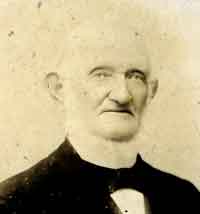
John James Murphy
1822–1909
Irish link: Documented
The Kilrane emigrant of 1844 who landed with £1, dug ditches at Chascomús and died owning two estancias: the arc of the sheep boom in one life.
- Land and business

Visiting
Visiting: Not confirmedas of 11 October 2026
No finding describes a memorial or visitor site in Kilrane; the research notes that local memorials were not confirmed.
Kilrane is a parish in the baronies of Forth and Bargy in south Wexford, the second of the two districts that, by Patrick McKenna's account, supplied about four-fifths of Irish emigrants to Argentina. Edmundo Murray lists Kilmore and Kilrane as the Wexford home parishes, with Westmeath and Longford supplying most of the rest. McKenna puts Wexford's share of permanent settlers at just under 16 per cent. He traces the Wexford chain to Patrick Browne, of a Catholic gentry family of Forth and Bargy, whom a Liverpool bank sent to the River Plate in 1826; Browne sent home for workers, who spent about a year in his salting houses and then herded sheep on shares.
The best-documented emigrant is John James Murphy, born in 1822 at Haysland, Kilrane. Murray's account "From Kilrane to the Pampas" has him leave Kilrane on 13 April 1844, take a cart to Wexford and a boat to Liverpool, and sail on 21 April on the brig William Peile with 115 Irish emigrants. Becalmed for about three weeks, he reached the River Plate on 25 June 1844 with about one pound. He rose from ditch-digger and shepherd to owner of two estancias, and in 1911 the railway opened a station named Murphy on his former land in Santa Fe.
"The Kilrane Boys", a song by the teacher Walter McCormack, commemorates the 1844 departure of Murphy and his companions. The research did not confirm any local memorial in Kilrane.
1822–1909
The Kilrane emigrant of 1844 who landed with £1, dug ditches at Chascomús and died owning two estancias: the arc of the sheep boom in one life.
Sources